
For kids who receive school meals, the summer months can be the hungriest time of year. Patti Bilbrey, School Nutrition Director of Scottsdale Unified District, saw this need and was determined to meet it. Through summer non-congregate, a flexible program that allows families to grab up to a week’s worth of ready to eat, frozen, or shelf-stable food for their children all at once, Scottsdale Unified District was able to serve 135,000 meals!
When Patti was looking at a site eligibility mapper, she saw “rural” designated areas and it piqued her interest. In January, she said to herself, “I really wish we could do a rural site, there must be something we can do in the Southern part of Scottsdale.” However, she knew rural designation was limited in the valley.
One April day, she poured over a USDA rural designation map and saw a green portion on the edge of their district. Although there was no school building in that designated green area, Patti saw a different building. Smack dab in the middle was Scottsdale Community College (SCC). Despite it being April, Patti and her team were determined to make non-congregate summer meals an option for that summer. From this experience, she is confident that “non-congregate is possible to operate, no matter the timeline!” But we know that it takes many different aspects to come together in order to make it happen!
Without many individuals, partnerships, and preparations, Patti would not have been able to operate such a successful, new summer non-congregate site this year. By taking a deeper dive into who and what is behind the scenes of this program, we’re lifting up the invaluable learnings and best practices that Patti and her team incorporated into their program to make it a success this past summer!
A Community That Comes Together
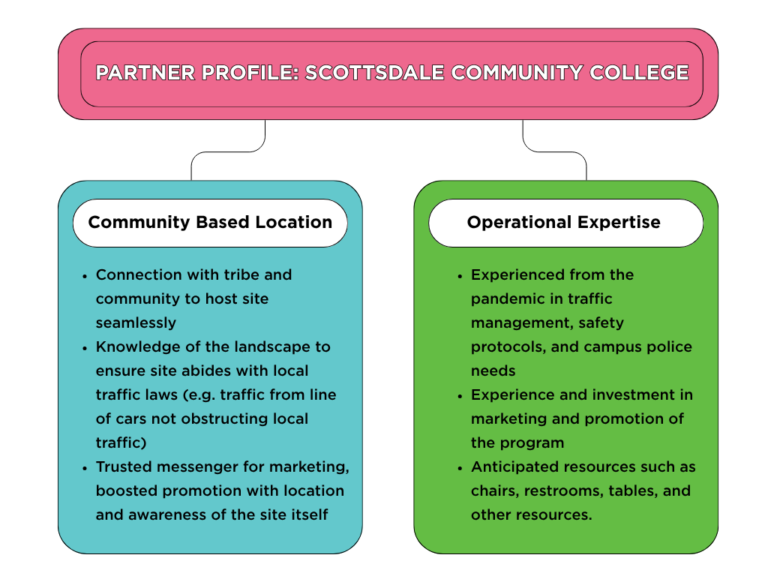
Scottsdale Unified District’s partnership with Scottsdale Community College (SCC) was critical to serving rural non-congregate meals. SCC was such a strong, supportive partner throughout the entire process. During the pandemic, SCC administered covid vaccines there and had previous experience with traffic and lines management, police safety enforcement needs, and local traffic laws to abide by. Furthermore, SCC already had an established relationship with the local Salt River Pima-Maricopa Indian Community, which allowed for additional outreach and tailored messaging to reach more children outside of the school district.
Often partner buy-in is a common concern for sponsors. However, SCC leaned in and saw the value that summer meals could provide to their broader community. Whether it was directly promoting the summer program, having campus police as a resource to set up lines and manage the site, or thoughtfully ensuring Patti and her team were comfortable with restroom access, chairs, SCC went above and beyond as a host. “What you think will be the hardest hurdle to get past, is actually not.”
People in your community want to help.
“Looking for those community actors looking to help. It might not be a community college specifically, it could be your city’s government, or something else, but community partnerships are integral and so helpful!” says Patti.
Through partnership and collaboration, the novelty of summer non-congregate is not as daunting and Patti is more inspired to support other districts in making it feasible to operate in future summers. She sums it up so well: “It is hard when you don’t know what you don’t know, but don’t let that deter you! You learn as you go and that’s fine!”
Sustainable Staffing and Program Models
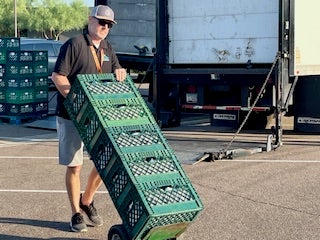
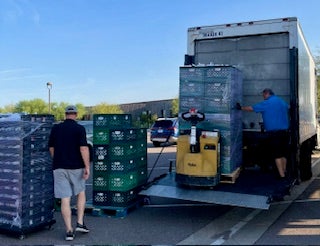
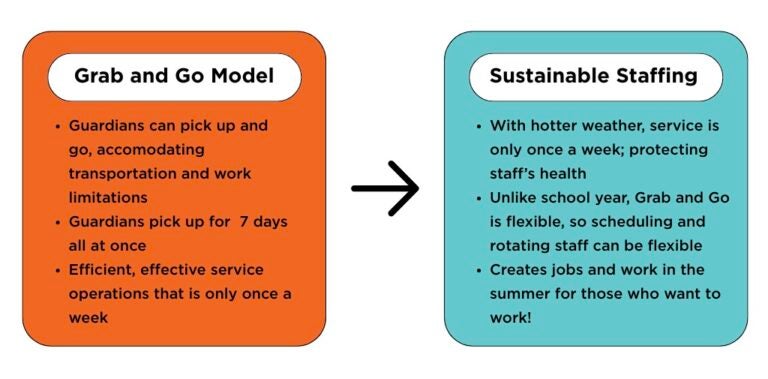
The guiding question that led to Scottsdale Unified District choosing grab and go was this: “What was going to be the most convenient for the family?” “Not many families can come in and eat at an open site 7 days a week,” says Patti. “We wouldn’t have the staff to even host that,” she continues. Scottsdale Unified District’s Grab and Go program model demonstrates that sustainable, tailored non-congregate models can also correlate with sustainability for your staff. For Scottsdale Unified, Grab and Go made the most sense and met their community’s needs the best.
Scottsdale Unified’s Grab and Go Model
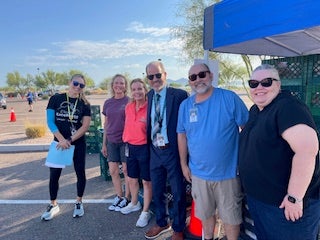
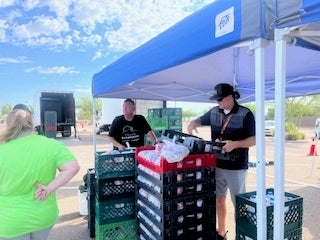
Scottsdale Unified District operated a Grab and Go summer non-congregate program, so that families can pick them up and take them home instead of eating together at a central site. When describing grab and go, Patti says, “it’s easy! Why go into the weeds when you don’t have to. One stop shop, get a week’s worth of food, how great is that!”
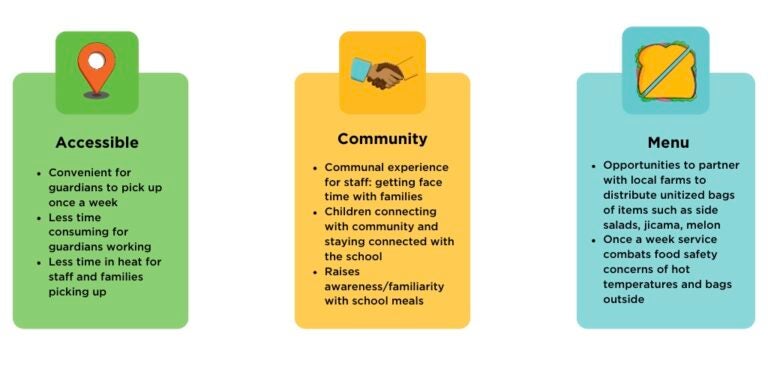
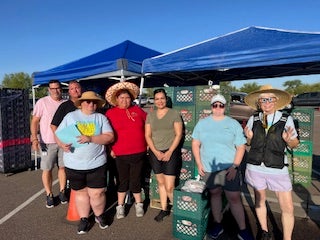
The grab and go program was not only convenient and accessible, but strengthened community bonds. By the end of the summer, Patti and her team knew people by name in the cars; it was very communal. You would see kids waving, building community with one another, and the program helped keep kids connected with the schools in the summer.
Sustainable Staffing
Staffing is a commonly named barrier when running a summer meal program. However, Patti has found great success in hiring staff because her grab and go model is flexible and convenient for staff as well.
One of the most common concerns when running the summer non-congregate program is the weather; specifically extreme heat and rising temperatures. Fortunately, the district’s grab and go model distributed 7 days worth of breakfast and lunch at one pick-up, minimizing the time staff spent in the heat. The program was not only convenient for families, but staff as well!
Another limitation was that some staff could only work certain days and hours, especially because it is summer break. Therefore, Patti organized and scheduled shifts very flexibly so her team could enjoy their summer as well. For instance, if some were on packing duty, Patti maximized their shift and had them distribute on days when they are already there packing. On hotter days, Patti also had staff consistently rotating to mitigate health concerns and discomfort. Patti put it best: “You can promote flexibility to make staffing sustainable and accessible. During the school year, the schedule is more set than a summer program – there are designated school meal times.” However, there is so much room for flexibility in a summer non-congregate program!
-
Flexible shifts and rotations
-
Maximize shifts with packers being distributors as well
-
Shorter shifts to cater to summer schedules
This past summer, Scottsdale Unified Districts program was fully run by their own staff, but next year the team wants to explore additional staffing solutions such as volunteers and students. From student volunteers trying to get community service hours, youth wanting a summer job, to other community groups looking for volunteer opportunities, there are many ways to staff your program in sustainable, cost-effective ways. Check out the resources below to learn more about innovative staffing for your summer program!
Why Rural Non-Congregate?
When reflecting on the past summer, one memorable individual comes to mind for Patti. Every Wednesday without fail, a teenage boy would walk across the reservation to pick up his meals. When grabbing the bags, he would explain that he didn’t need to take the perishable food items, because they did not own a refrigerator nor have electricity. “When you hear that,” says Patti, “you know you are here for the right reasons.”


On the last day of the program, he did not say much, but he would sit and just watch what was going on. It made his day to come see the team and the program. “This is not someone or something far away. This exists in our community – these are people right next door to us,” Patti says. Every week, the Nutrition Services team would see kids so excited to see familiar foods that they eat during the school year in the summer program, and seeing that excitement touched the team. The Nutrition Services team were also so excited to remain connected with their families while school was out and see the impact that summer meals made firsthand.