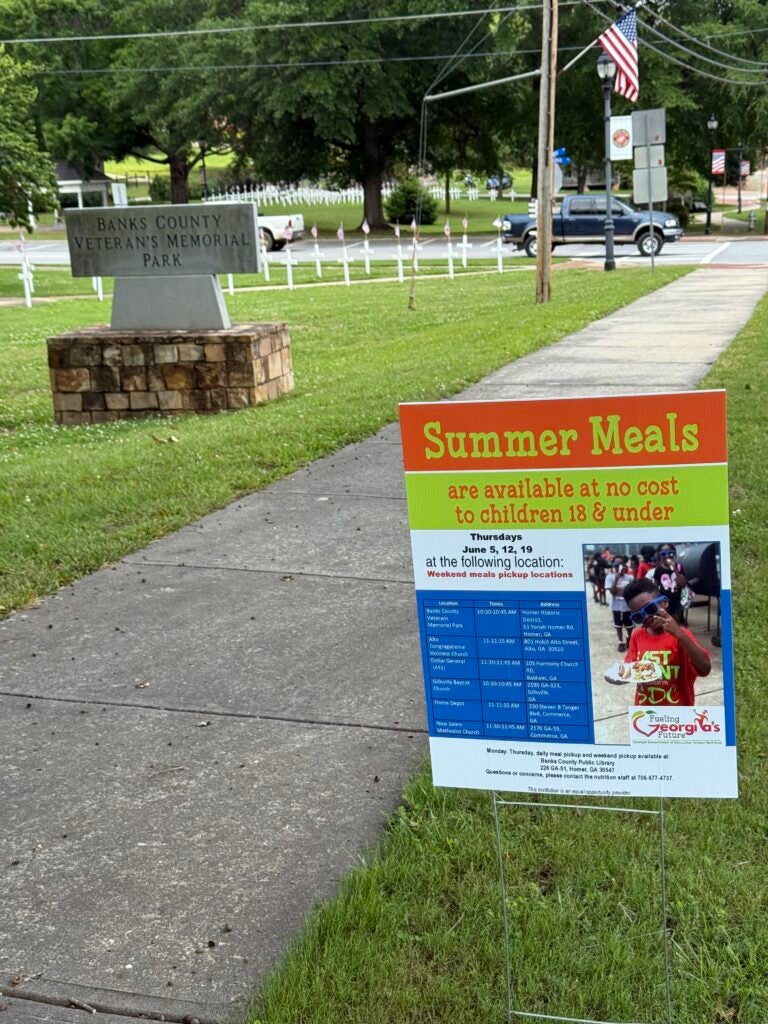
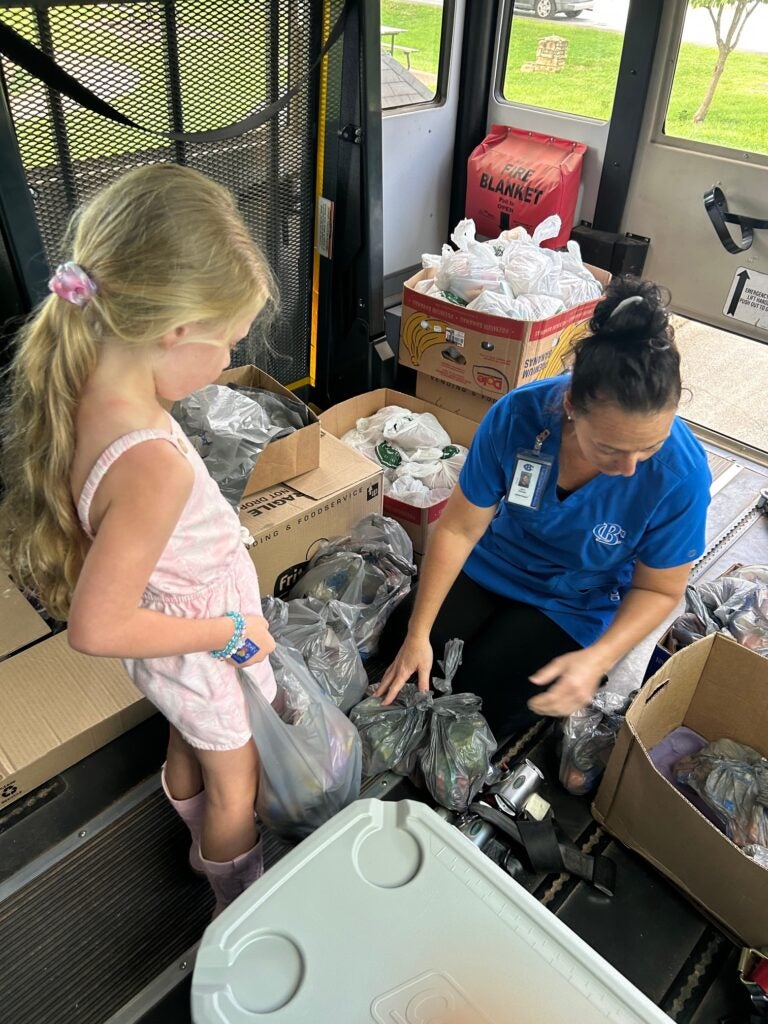
For kids who receive school meals, the summer months can be the hungriest time of year. Many rely on school breakfast and lunch during the school year to consistently and sufficiently feed their children. Nicole Blalock, school nutrition director of Banks County, worked with the support of her team to make rural non-congregate meals happen this past summer.
When asked how it went and if she will do it again, Nicole Blalock said they are “definitely going to do it next year, it’s the best way. I had no idea how many people were going to show up at the stops, but they showed!” For Banks County, their mindset was to “step out there and try it.”
“[We are] definitely going to do it next year, it’s the best way… I had no idea how many people were going to show up at the stops, but they showed!”
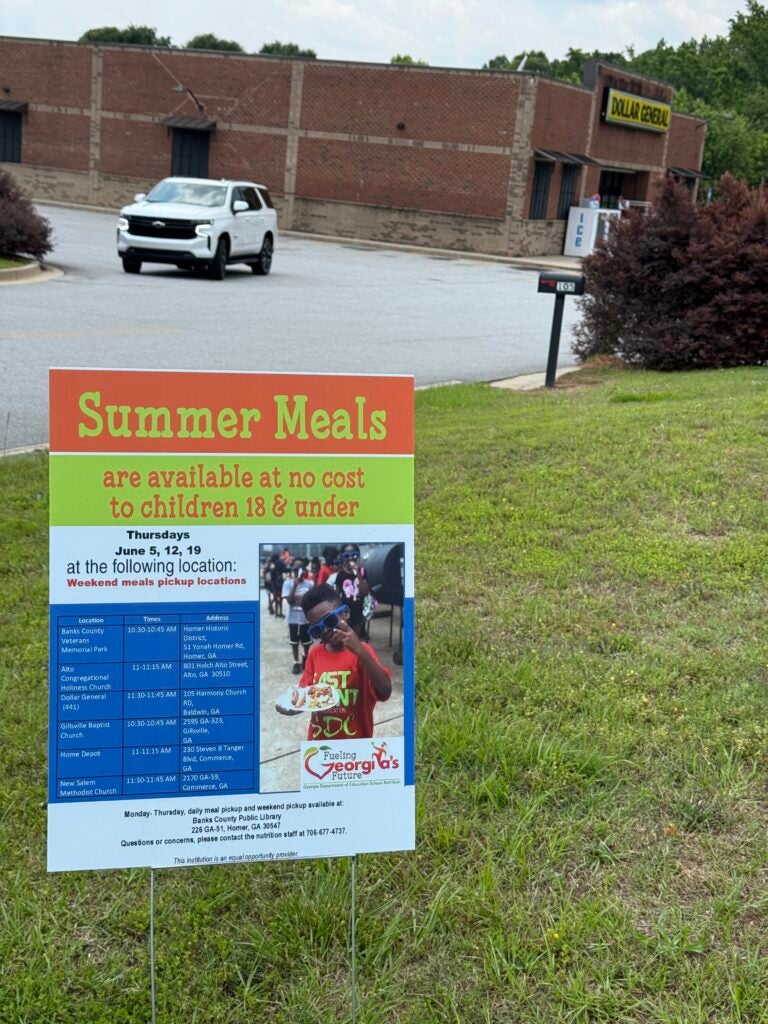
Banks County operated a combination of the mobile meals and walk up/curbside distribution model. The mobile meals model meant that Banks County would travel in vehicles to multiple, centralized sites to make it more accessible to distribute to multiple families. In addition, there were other site locations where families could walk up and pick up meals. Not only was Banks County able to serve 7,529 meals, but they were able to feed 5,630 more kids this year!
However, without integral support and learnings, Nicole Blalock and her team would not have been able to operate a successful, new summer non-congregate program. By taking a deeper dive into who and what is behind the scenes of this program, it becomes very evident why they were able to accomplish everything they did this summer.
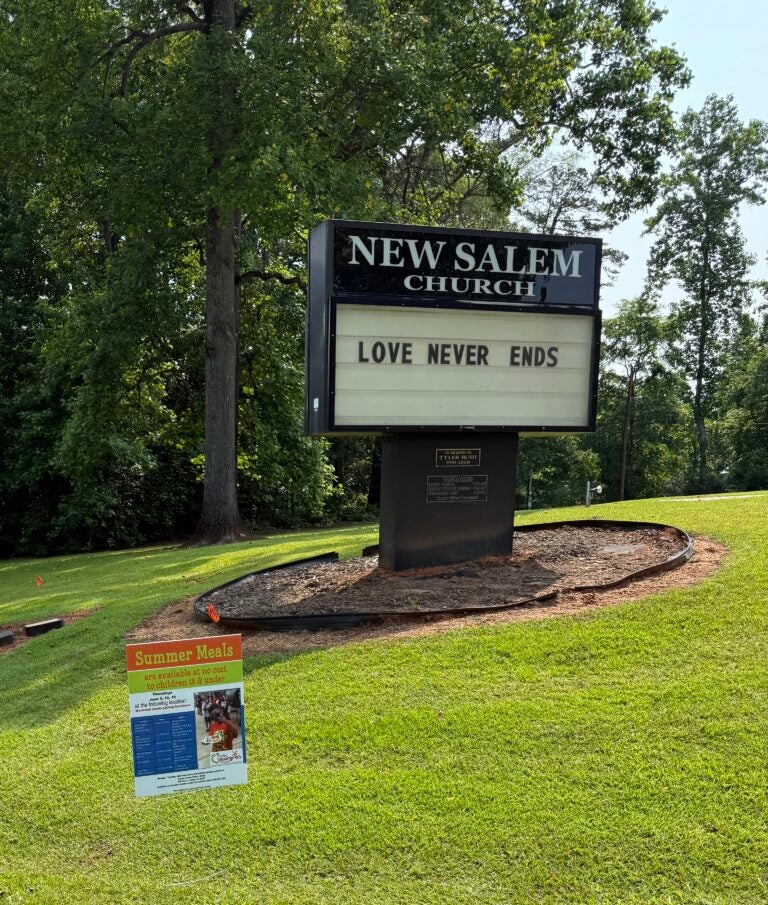
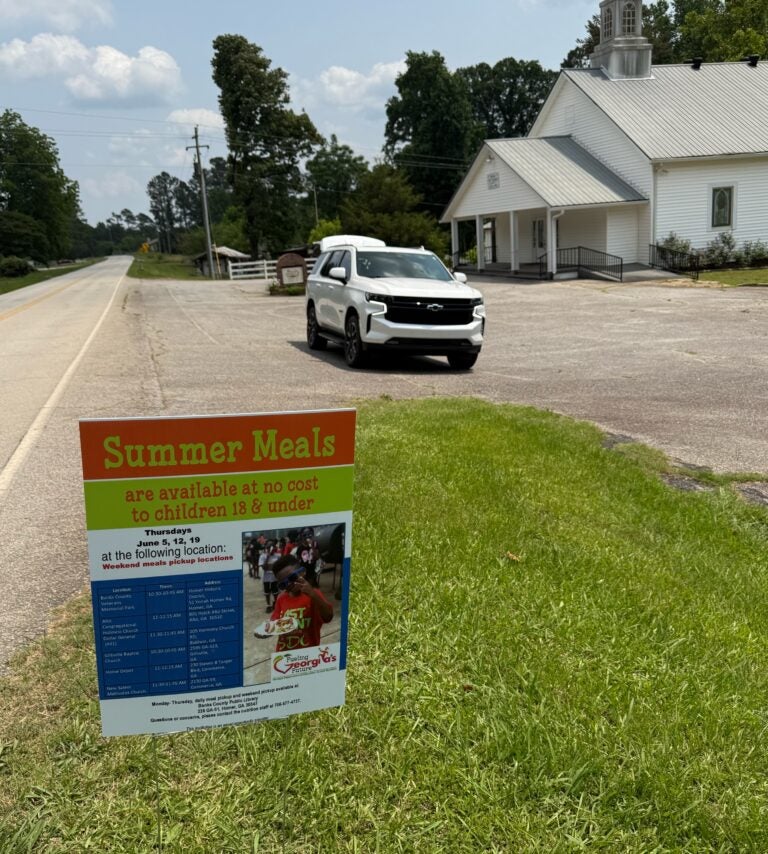
Partnerships: A Program Stronger Together
When school is out for summer break, summer programs like rural non-congregate can take a lot of support and infrastructure. However, partnerships within the school and community make it easier and sustainable to run a non-congregate program! Below are a handful of integral partnerships Banks County tapped into that other sponsors can learn from.
- Transportation Department – Partnered with transportation department to utilize school buses for mobile meals distribution.
- Churches – Partnered to spread the word about the program and identify who to reach in the community.
- Social Workers – Partnered to promote the program and identify who to reach in the community.
- Food Pantries – Partnered to promote the program and identify who to reach in the community.
- Libraries – Partner with them for advertising and promoting the program.
- Superintendent – Received support from the superintendent and administration, helped bolster confidence in trying out a new program.
- White County – Abby Rowland, the School Nutrition Director of White County, encouraged Nicole to try and was available for questions and collaboration. White County is a neighboring, similar demographic/community.
All these various community actors are a big part of the reason Banks County could run their non-congregate program. Interested in cultivating community partnerships but not quite sure where to start? Check out some of No Kid Hungry Georgia’s webinars and resources on community partnerships for summer programs!
Resources
Explore our on-demand webinar, Together We Serve: How Schools and Community Organizations Are Boosting Summer Meals.
Designed for sponsors, partners, and state agencies interested in leveraging partnerships, this webinar highlights how school districts and community-based organizations partnered to expand summer non-congregate service models. Presenters shared successful collaboration models, innovative approaches, and real-world examples of how partnerships can meet community needs and strengthen summer meal programs.
By working together, schools and community-based organizations can ensure that summer meals last as long as summer itself, and that every county, neighborhood, and child is served.
Wondering what sponsors across the nation do for their rural non-congregate summer program? Check out this session from the No Kid Hungry Georgia & DECAL Summer Summit on Innovative Partnerships Across the Nation!
Key to Success: Feedback
Since this program was still new to Nicole and her team, they were intentional about collecting feedback every step of the way. At site stops, she would ask families what they preferred and liked in the meals. Then, she used that feedback to inform future meals and ideas. In her own words, why not “give them what they want and what their kids want?” Familiarity of foods also matters a lot to children at times as well.
Nicole also made sure to gather feedback from her team as well. For instance, she received very helpful feedback from her staff about how to make it easier next year in packaging and what type of containers they’ll need next time. Inevitably, operating a newer program comes with lessons you can only learn after doing the program. Feedback ensures your program is set up for success in the long term. It also ensures you can keep adapting to your community’s needs and reach more kids each summer.
For more resources and examples of information gathering, check out this list below from seasoned sponsors and community based organizations, who have identified all kinds of way to gather feedback before, during, and after the summer.
Looking to Summer 2026
Nicole has an amazing mindset when it comes to the program – “Try it, tweak it, keep on.” Banks County saw such positive experiences and impact from the program that they are definitely doing it for future summers. Banks County is one of the many counties across Georgia operating rural non-congregate and seeing their communities respond so well to it. You can start today by collaborating with your school administration or even reach out to neighboring counties who have already operated rural non-congregate before.