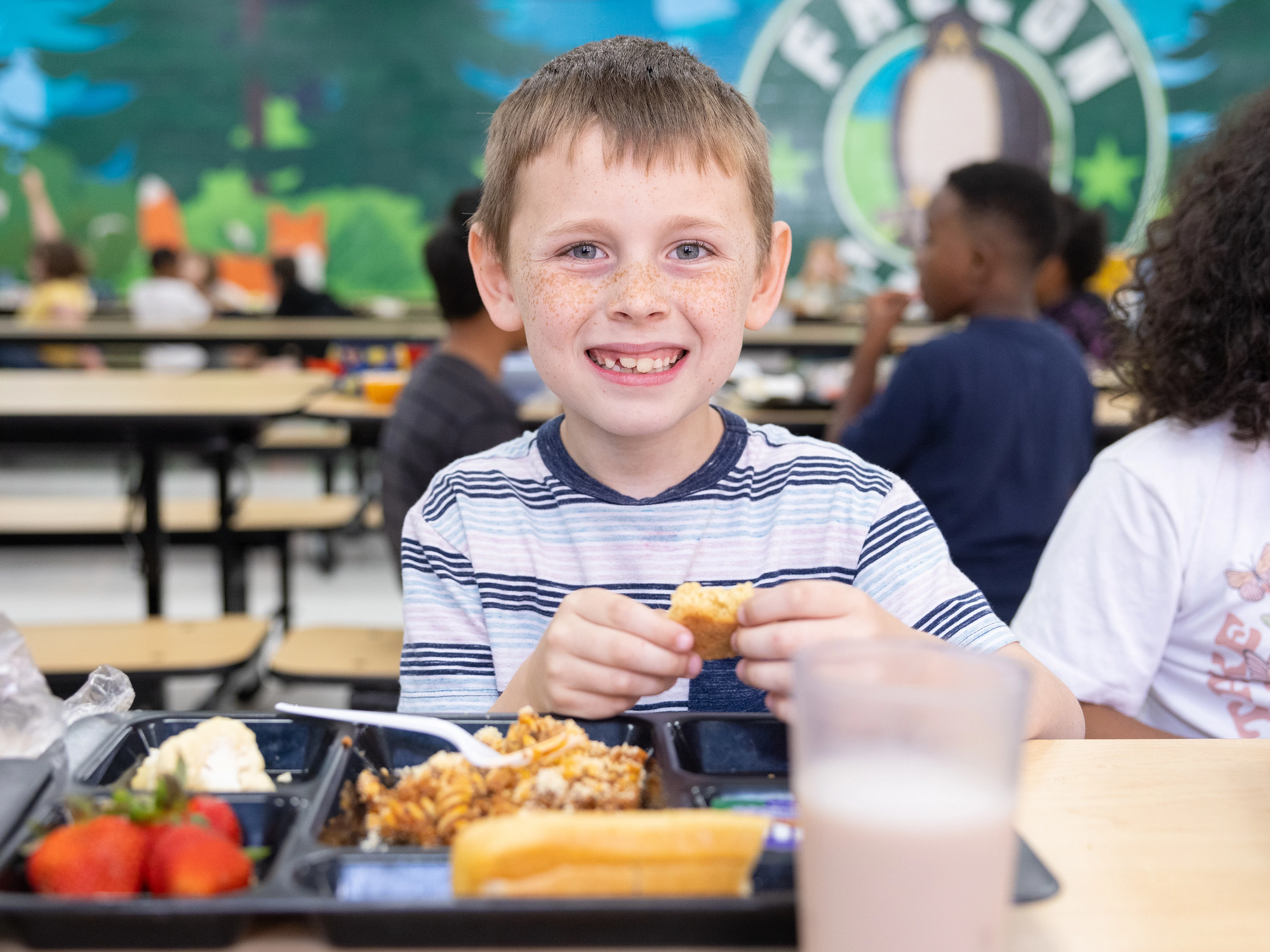
School breakfast is one of the most effective ways to ensure students start the day ready to learn, but traditional before-school service can create barriers for many children.
Breakfast After the Bell models like Breakfast in the Classroom, Grab-and-Go Breakfast, and Second Chance Breakfast make breakfast part of the school day, increasing access and student meal participation.
To support schools and districts in strengthening their breakfast programs, No Kid Hungry Tennessee has gathered some of our most useful school breakfast resources in one place. Explore tools and guidance to help you plan, strengthen implementation, engage students and families, promote school breakfast, and increase participation.
OVERVIEW | Choosing Your Breakfast Delivery Model(s)
- Innovative Breakfast Delivery Options – Explore how different Breakfast After the Bell models work and the potential increases in breakfast participation that schools can see with each approach. Learn how each Breakfast After the Bell model is structured, and the percentage increases your school breakfast program can experience by adopting these models.
- VIDEO | Breakfast in the Classroom 101 – geared toward teachers and principals, this short video outlines how Breakfast After the Bell (BAB) benefits students and classrooms and how it can be a seamless part of the instructional day. Developed by No Kid Hungry in collaboration with the Alliance for a Healthier Generation.
- VIDEO | Grab N’ Go to the Classroom 101 – geared toward teachers and principals, this short video outlines how grab-and-go school breakfast programs can be beneficial. Developed by No Kid Hungry in collaboration with the Alliance for a Healthier Generation.
- VIDEO | Second Chance Breakfast 101 – geared toward teachers and principals, this short video outlines how second chance school breakfast programs can be beneficial. Developed by No Kid Hungry in collaboration with the Alliance for a Healthier Generation.
- New! High School Breakfast: Creative Ideas from School Nutrition Leaders – Explore this resource for ideas and inspiration to help more high school students start their day with school.
- Breakfast After the Bell Myths – Learn about Breakfast After the Bell (BAB) myths and the facts that disprove them with this resource. For example, learn how, despite the misconception, BAB does not cause mess or reduce instructional time.
- Tips for Implementing an Effective Grab and Go Breakfast Program – Learn tricks of the trade to make your Grab and Go program efficient and effective, such as bringing your grab-and-go program to the classroom, soliciting student feedback, and engaging school staff.
- VIDEO | How High Schools Are Feeding More Hungry Kids – All across the country, school districts are changing the way they serve breakfast, with help from No Kid Hungry.Watch and learn from this high school at Galena Park ISD in Texas on how they use a three-pronged approach to breakfast. Hear from principals, teachers, and students about how a simple change to how they serve breakfast is helping feed so many more students.
- VIDEO | Breakfast Success Story: Longfellow Elementary – Hear from teachers, students, and the principal of Longfellow Elementary in Wisconsin on how a simple Grab and Go program provided a calmer classroom experience, higher attendance rates, and more of a community environment.
RESEARCH | Make the Case for School Breakfast
- New! What the Research Says About School Breakfast for All – This research brief explores the benefits of providing breakfast at no cost to all students in a school, district, or state.
- New! What the Research Says about Breakfast After the Bell – This research brief explores the benefits of Breakfast After the Bell, which refers to serving school breakfast during the school day rather than before school starts.
- A Study on Chronic Absenteeism and Breakfast After the Bell – The study provides a high-level summary of study results exploring the impact of Breakfast After the Bell programs on reducing chronic absenteeism and increasing student success.
- Benefits of School Breakfast – Developed by the Food Research & Action Center (FRAC), this social impact analysis shows that feeding kids a healthy school breakfast can dramatically affect their academic performance, health, and economic futures.
COLLABORATION & BUY-IN | Building Schoolwide Buy-In
- Talking Points for Introducing Breakfast After the Bell to School Stakeholders – These talking points will help you get started as you plan to introduce school stakeholders—including teachers, principals, and superintendents— to Breakfast After the Bell.
- Breakfast After the Bell Myths – Learn about Breakfast After the Bell (BAB) myths and the facts that disprove them with this resource. For example, learn how, despite the misconception, BAB does not cause mess or reduce instructional time.
- A Guide to Building Relationships with School Nutrition Staff – Learn who to connect with on a school nutrition team, when to reach out, and how to build strong relationships that support successful collaboration.
- CASE STUDY | How Teamwork and Communication Expanded School Breakfast Access – Learn how school nutrition leaders at Rio Hondo Independent School District in Texas enhanced school meal access through strategic communication and feedback collection efforts.
PLANNING & IMPLEMENTATION | Launching Your Program
- Breakfast After the Bell Pre-Implementation Checklist – This resource features action steps schools can take to prepare for Breakfast After the Bell (BAB) implementation.
- Breakfast in the Classroom Rollout Timeline – This timeline tracks long- and short-term tasks, as well as actions school stakeholders can take, to prepare for Breakfast in the Classroom implementation.
- Tips for Implementing an Effective Grab-and-Go Breakfast Program – Get practical tips for strengthening your Grab-and-Go breakfast program, from bringing breakfast closer to students and gathering student feedback to engaging school staff in making the model work.
- Breakfast After the Bell Equipment Tips – This resource is designed to help guide school nutrition staff in choosing what equipment would be useful for whichever Breakfast After the Bell model they choose.
- Teachers’ Guide to Breakfast After the Bell: Set Up & Clean Up – This resource outlines how classrooms can be affected by Breakfast After the Bell and shares best practices for creating a plan for classroom set-up and clean-up where breakfast is served or eaten.
PROMOTION & ENGAGEMENT
- New! School Meals Application Outreach Toolkit – The School Meals Application Outreach Toolkit helps school districts get the word out to families about why completing and submitting free and reduced-price meal applications matters.
- School Breakfast Promotion Strategies – This resource highlights promotion strategies, like contests & challenges, social media, posters & flyers, taste tests, special guests, and more, to build awareness, generate excitement, and ultimately increase school breakfast participation.
- Student Involvement in School Breakfast – This resource contains best and promising practices that schools and districts can test and incorporate to connect with student voices and improve breakfast participation.
- Strategies for Increasing Breakfast Participation at Middle and High Schools – This resource provides strategies for modifying your school breakfast program to engage middle and high school students and get more students to eat breakfast.
- Student Feedback Toolkit for School Meals – This toolkit contains tools for conducting surveys and listening sessions for school meals with high school-aged students.
- CASE STUDY | Exploring Parental Perspectives: Insights on School and Summer Meals Programs in North Texas – This case study in Dallas, Texas explored feedback collected from parent focus groups who discussed school meals, including breakfast, lunch, and summer meal programs. Their valuable feedback can be instrumental in reducing stigma, increasing awareness, and boosting participation rates.
WEBINARS
- Starting a Breakfast After the Bell Program: How to Get Started to Prepare for Success – This webinar is intended for anyone who is interested in learning more about starting a Breakfast After the Bell program (breakfast in the classroom, grab & go breakfast, or second chance breakfast). School district leaders from across the country share their experiences—both the challenges and the successes—building support for and launching their district’s Breakfast After the Bell (BAB) programs.
- An Update on School Breakfast Research – Harvard researcher Juliana Cohen joined No Kid Hungry for a short, practical webinar that highlighted the latest school breakfast research and what it means for district programs. Participants learned how recent findings could support participation, inform menu and service decisions, and strengthen conversations with administrators.
- Breakfast Menus That Students Love – This webinar brought together three award-winning school nutrition directors from small districts who are trailblazers in breakfast menu planning.
- Celebrating Students Through Equity: A Community Approach to School Breakfast – This webinar explored how centering community voices can enhance breakfast programs, ensuring they are accessible, inclusive, and responsive to all students’ needs.
- Student Voices on the Menu: Leading the Conversation on School Meals – In this webinar, hear from inspiring student leaders who have worked with their schools to create successful programs where student voices are not only heard but valued.
- Boosting Breakfast Participation: Breakfast After the Bell and Other Strategies – In this webinar, school nutrition leaders shared their experiences with second chance breakfast in middle schools, using breakfast kiosks in elementary schools, implementing food trucks, using farm-to-school practices, and more.
- Creating a Buzz About Breakfast: Promotion Strategies for Generating Excitement & Boosting Participation – This webinar highlighted a variety of promotion strategies to build awareness, generate excitement, and ultimately increase school breakfast participation.
No Kid Hungry Tennessee is proud to support partners with the tools and resources they need to make school meals a success. We hope this roundup provides practical guidance and inspiration to help strengthen school breakfast programs, increase participation, and ensure more students have access to the meals they need to learn and thrive. Find more resources, tools, and webinars at our Center for Best Practices.
For more assistance, reach out to the No Kid Hungry Tennessee team by submitting an inquiry form on our website. We’re here to help you find the resources, guidance, and support you need to make school meals a success.
Breakfast Bites Newsletter
Short, practical updates on what’s working in school breakfast: delivered to your inbox. Breakfast Bites shares timely insights, tools, and examples from schools and districts across the country, with a focus on strategies that are practical, tested, and relevant to current school breakfast conditions. Sign up today!
Have a Breakfast Success Story?
Know of a breakfast idea that’s working for students? Tell us about it! We may feature the story in a future issue and share what’s working with school nutrition teams across the country. Share your breakfast success!
No Kid Hungry’s Center for Best Practices is a resource library with hundreds of tools and ready-to-use resources dedicated to ending childhood hunger. Our dedicated team supports stakeholders by providing guidance, conducting research and analysis, and testing innovative approaches to identify emerging best practices. Explore upcoming and on-demand webinars, toolkits, research, data, and more on their website.