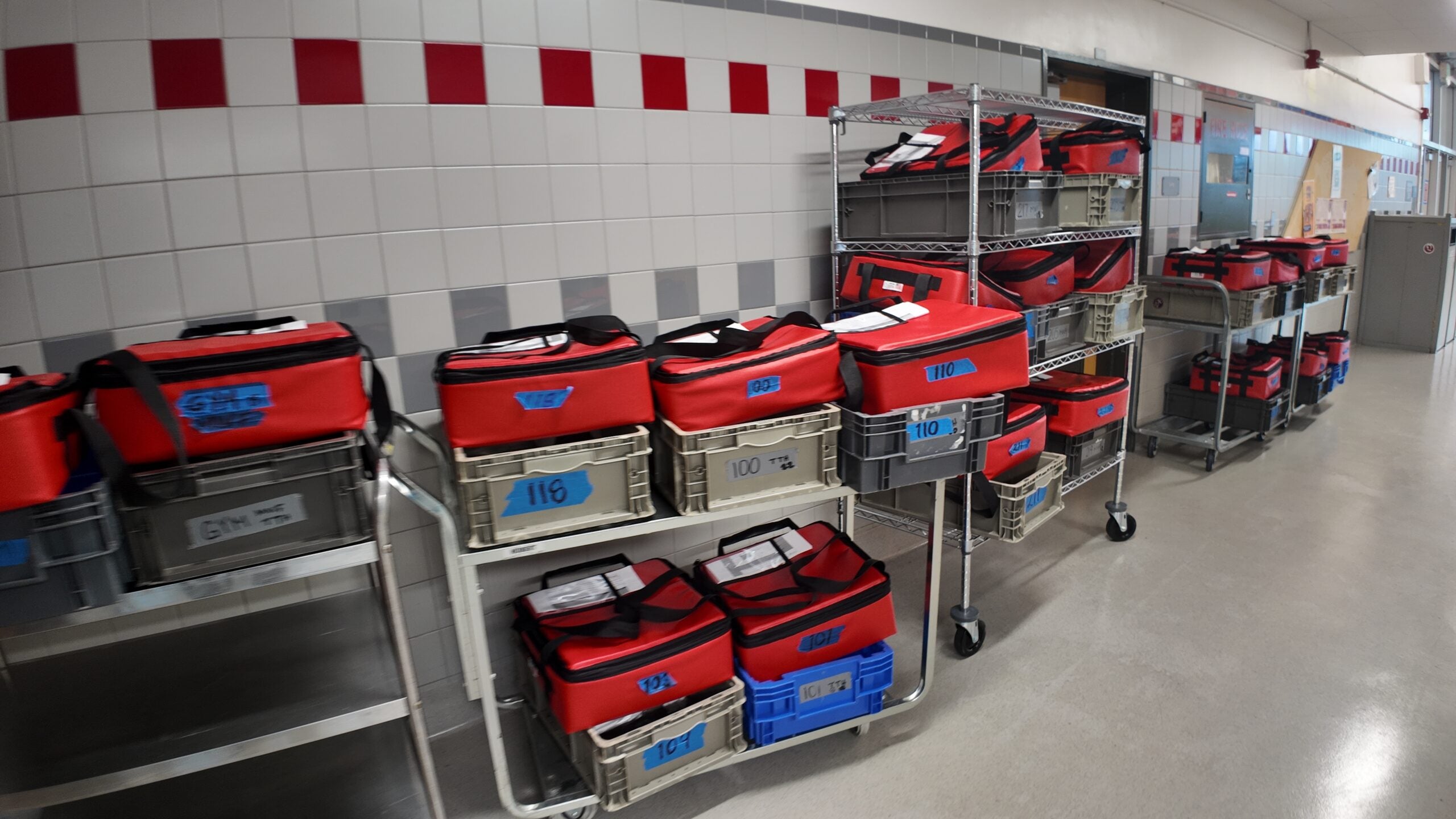
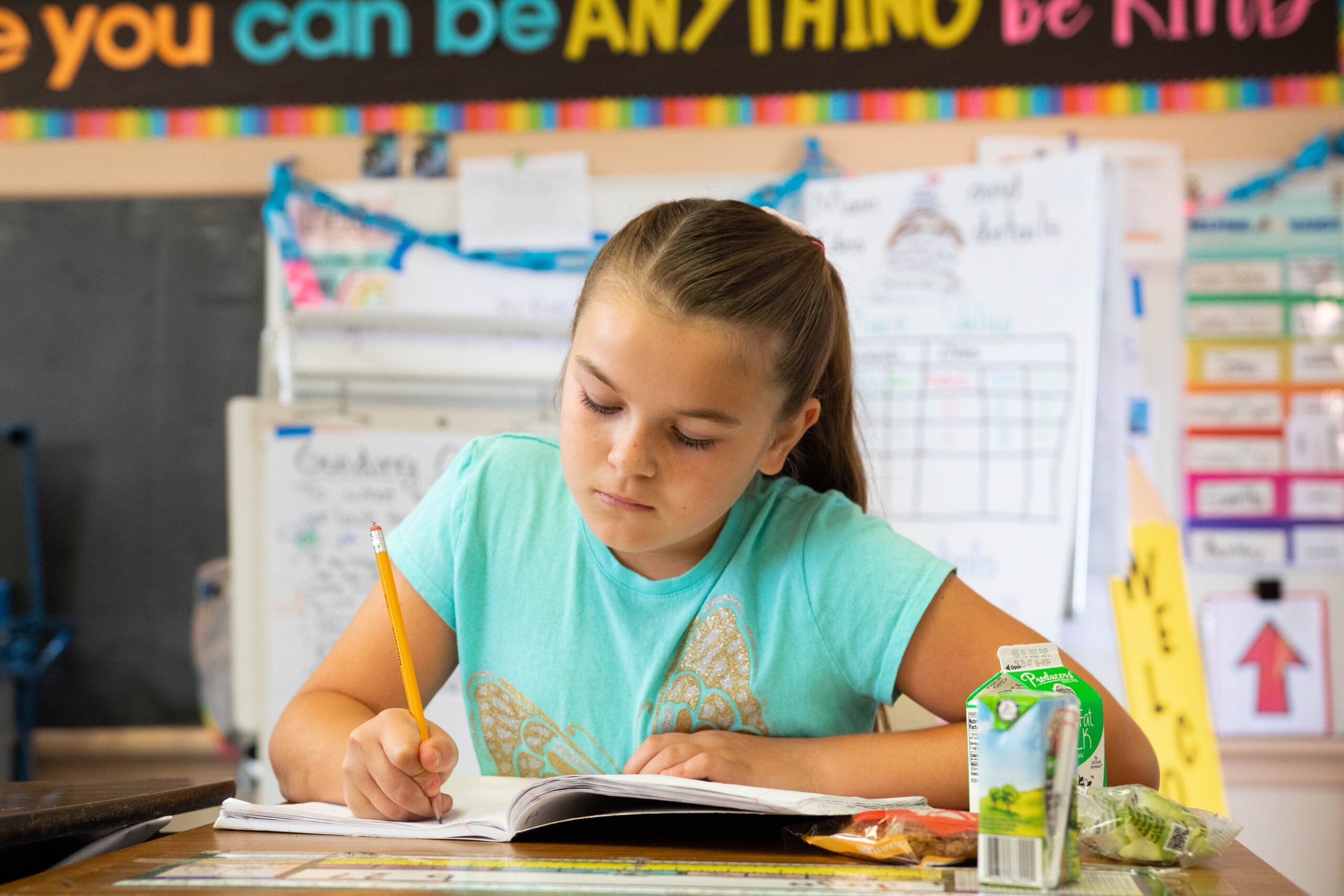
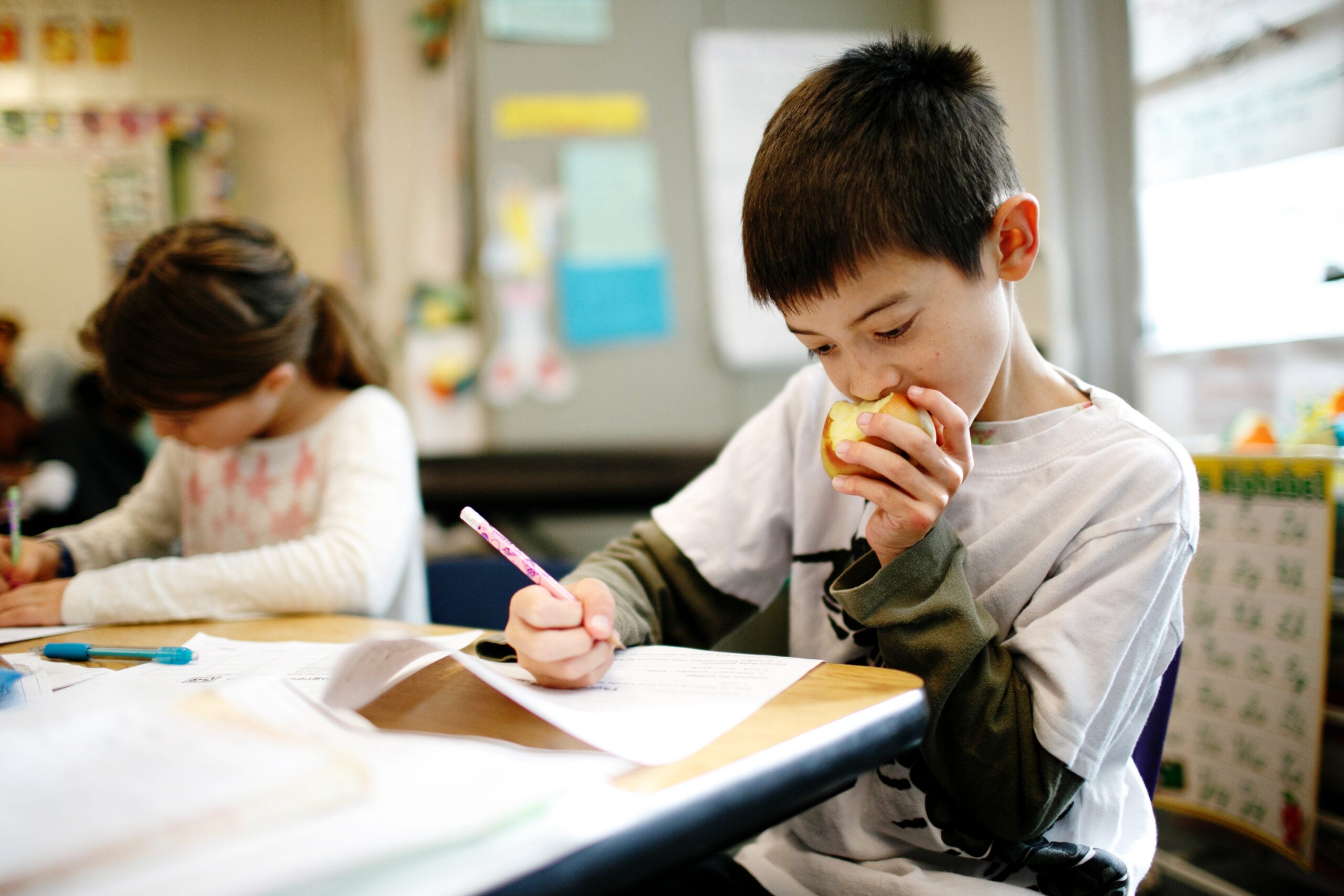
Breakfast in the Classroom (BIC) is a highly effective model of the broader Breakfast After the Bell (BAB) initiatives, designed to eliminate the common barriers that prevent students from eating school breakfast. Instead of requiring students to arrive early for a traditional cafeteria setting, breakfast in the classroom delivers nutritious meals directly to students after the instructional day has begun.
This seamless integration ensures all students, regardless of their transportation schedules, family income status, or desire to socialize, have access to a healthy morning meal. And this leads to significant increases in participation, improved academic focus, and reductions in chronic absenteeism. Eating a school breakfast can reduce chronic absenteeism by as much as 6 percent.
Here are some highlights of school districts who have implemented breakfast in the classroom and are going above and beyond to ensure kids start their school day nourished and ready to learn.
San Francisco Unified School District (SFUSD), San Francisco County
Despite being an affluent metropolitan and innovation hub, childhood hunger is pervasive in San Francisco. Many students arrive at school without having eaten a nutritious breakfast, a hurdle that affects their concentration, academic performance, and overall well-being. The SFUSD School Nutrition Services team, led by Jennifer LeBarre, recognized this barrier and has actively championed initiatives like breakfast in the classroom to dramatically increase morning meals and ensure student achievement.
“Maybe our biggest academic intervention is having breakfast every day. Having the extra food in the school is huge. It is definitely getting eaten. And I think it does show love for your students. Our school’s mission is love, liberty, and liberation, and breakfast is under the love category.” – Chuck Waters, School Social Worker, Visitacion Valley Middle School
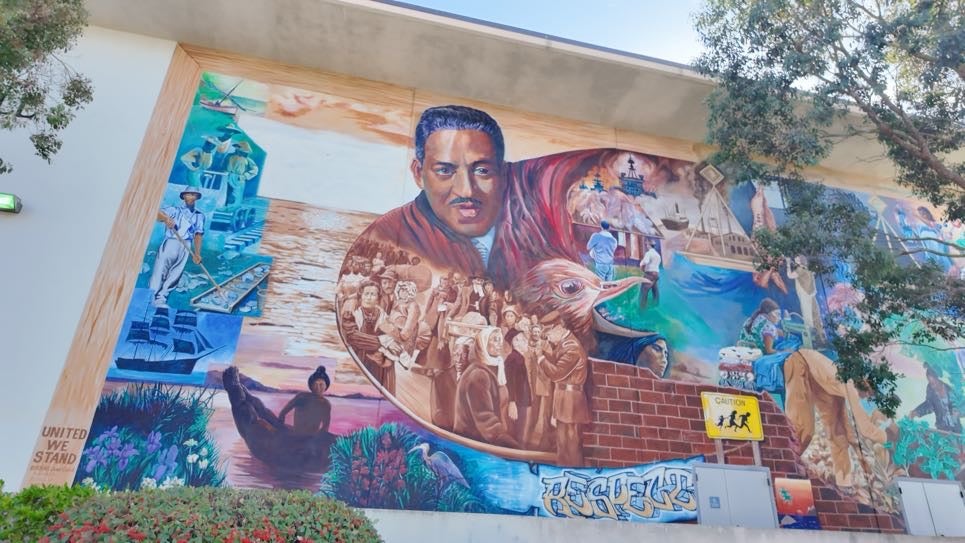
At Thurgood Marshall Academic High School, located in San Francisco’s Bayview-Hunters Point neighborhood, school breakfast is served in the classroom after the opening bell. It is a contributing factor in student success and their decline in suspensions. By moving breakfast out of the traditional cafeteria setting and directly into the classroom, the district has been able to bridge the hunger gap, leading to reported increases in breakfast participation from as low as 17% to over 65% in schools during the first year of implementation. This has ensured more students have the fuel they need for a successful school day.
Los Angeles Unified School District (LAUSD), Los Angeles County
“Breakfast in the classroom seems like such a simple idea and yet it has such a profound impact on students and their performance in school,” said Manish Singh, LAUSD Director of Food Services. “When all students have access to a healthy breakfast after the start of the school day, everyone has the same chance to succeed. It really is the most important meal of the day!”
This year, No Kid Hungry and LAUSD launched the Access to Breakfast (A2B) Challenge to emphasize the importance of breakfast in students’ school day as well as to enhance LAUSD’s school breakfast program by engaging teachers, principals and school nutrition professionals. The ultimate goal of the A2B Challenge was to inspire and support the start of 15-20 new breakfast in the classroom programs and help increase the daily breakfast participation by 10,000 students.
Albertsons Companies Foundation, CVS Health Foundation, and General Mills have signed on as Breakfast Hero sponsors for the A2B Breakfast Challenge. They are joined by Dollar Tree and Habit Burger & Grill as in-kind sponsors, all to encourage breakfast participation by providing generous support to enhance the school meals program for school participants.
Of the over 1,500 schools in LAUSD’s four regions, eight schools had either the highest increase in breakfast participation and the highest participation rate based on average daily attendance. The winning schools were:
North Region:
- Gridley Elementary (Highest Participation)
- Mosk Elementary (Biggest Jump in Participation)
South Region:
- Broadacres Avenue Elementary (Highest Participation)
- Annalee Elementary (Biggest Jump in Participation)
West Region:
- Ambassador Global Education School (Highest Participation)
- Brockton Elementary (Biggest Jump in Participation)
East Region:
- Gratts Elementary (Highest Participation)
- Bell High School (Biggest Jump in Participation)
No Kid Hungry California Breakfast in the Classroom Learning Tool
This year, No Kid Hungry officially launched a virtual California breakfast in the classroom learning tool. The tool was designed to help California schools and school staff learn more about the program and to successfully implement and optimize their school breakfast programs. The personalized learning tracks for educators, principals, custodians, and school nutrition directors and staff features a series of short, informative videos. They provide step-by-step guidance on logistics, stakeholder engagement, and best practices to ensure smooth operations and maximum student participation. We invite schools that utilize breakfast in the classroom to help improve the tool and share their knowledge. Do you have a document or guide that has helped you with your program? Visit the Breakfast in the Classroom Learning Tool to learn more.
Ways You Can Help
New research by No Kid Hungry (see full report) reveals an overwhelming number of parents are struggling to put food on the table for their kids. This is especially true during the summer months when kids lose access to many essential free school meals. You can ensure kids have the nutrition they need to thrive in and out of the classroom and reach their full potential in a variety of ways:
- Donate. $1 can help provide 10 meals* to kids. Your support will help us fund meal programs all over the country and help us advocate for policies that will help kids get the meals they need. *Donations help support programs that feed kids; No Kid Hungry does not provide individual meals. Meal equivalencies vary. Learn more at NoKidHungry.org/OneDollar.
- Advocate for kids. Reach out to your elected officials and ask them to do more to end childhood hunger. Tell your lawmaker to advocate for policies that will help kids get the meals they need.
- Become a sponsor or expand your school breakfast program. Visit our Center for Best Practices for more information on the rules, eligibility, grant information and more.
Last update: December 9, 2025