For Immediate Release
Media Contact: Sanjida Nahar | nokidhungryca[at]strength.org
School Breakfast Changes Lives:
No Kid Hungry Issues Grants to Sustain Child Nutrition Programs
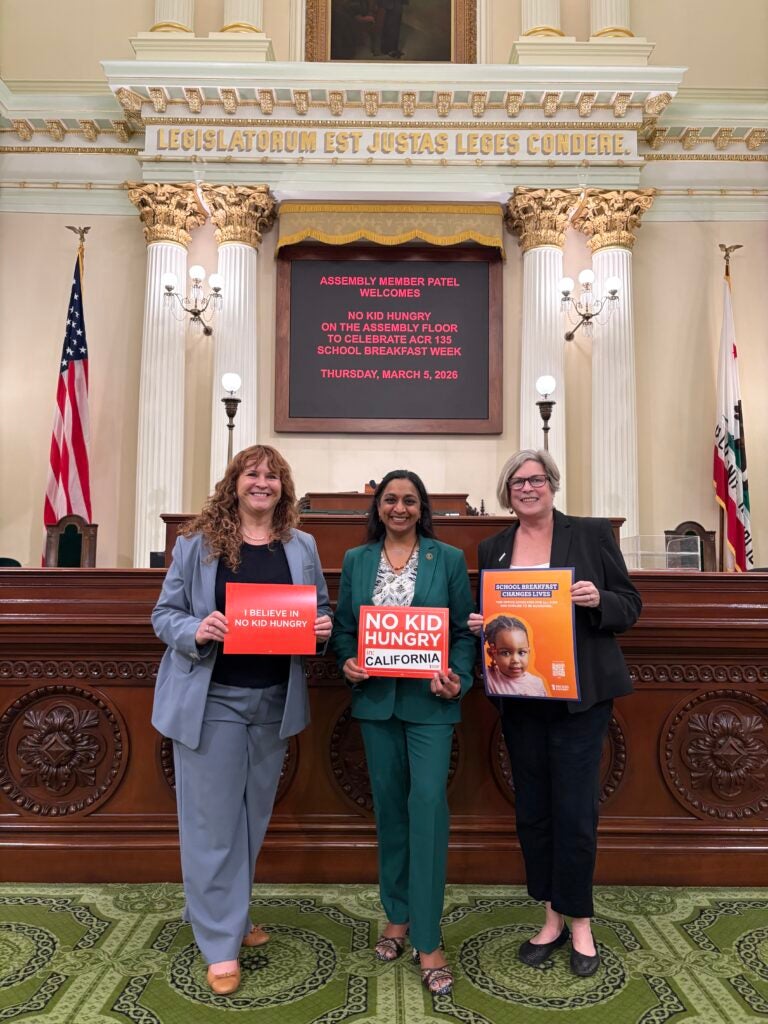
The California State Legislature Declares March 2–6, 2026 as School Breakfast Week Pursuant to ACR 135 by Assembly Education Chair Dr. Darshana Patel
Sacramento, Calif. – No Kid Hungry California is thrilled to announce the awarding of over $300,000 in new grants to support child nutrition programs in California. These funds will support 10 school districts dedicated to expanding access to nutritious meals for children.
Eating breakfast has a real, powerful effect on kids. Breakfast After the Bell (BAB), a key initiative championed by the No Kid Hungry campaign, provides every student the opportunity to start their school day with a nutritious meal. Studies have shown that kids who eat breakfast are more focused, score significantly higher on tests, miss fewer days of school, and have fewer discipline issues and visits to the nurse’s office.
Thanks to California’s Healthy School Meals for All, all California schools are able to offer breakfast and lunch to students at no cost.
Every meal served is a building block in a child’s education and overall well-being. However, according to the USDA’s most recent Household Food Security Report, fourteen million children in our country live in food insecure households. This means 1 in 5 children are facing hunger in the United States.
At a time when federal nutrition programs face reductions and tighter eligibility under H.R. 1, state leadership is more important than ever to ensure children and families continue to have consistent access to healthy meals.
“Starting the school day with a healthy breakfast ensures California students begin the day energized and ready to learn,” said Assembly Education Chair Dr. Darshana Patel. “School Breakfast Week highlights the direct connection between nutrition and academic success. As federal nutrition programs face increased uncertainty, California must continue leading the way to protect and expand access to school meals so every student has the opportunity to thrive.”
In times of crisis and economic uncertainty, adequate nutrition supports children’s immune systems, helping them stay healthier and better able to cope with physical and emotional stress. More than ever, school meals are critical to communities as they rebuild and create long-term food security, economic recovery, and mobility for families in California.
“No child should ever start the school day on an empty stomach,” said Kathy Saile, Director of No Kid Hungry California. “Breakfast After the Bell programs remove barriers and ensure that every student — regardless of background — has access to a nutritious meal. As federal policies shift, California’s continued investment in school meals is essential to protecting the progress we’ve made in the fight against child hunger.”
No Kid Hungry has awarded grants totaling $303,540 to the following California school districts to adopt, strengthen, and expand school breakfast programs:
Aspire Pacific Academy, Los Angeles County
Aspire Titan Academy, Los Angeles County
El Rancho Unified School District, Los Angeles County
Fullerton School District, Orange County
Gridley Unified School District, Butte County
Lodi Unified School District, San Joaquin County
Samueli Academy, Orange County
San Francisco Unified School District, San Francisco County
Standard School District, Kern County
Stockton Unified School District, San Joaquin County
This February, Assembly Education Chair Dr. Darshana Patel introduced ACR 135, proclaiming March 2–6, 2026 as School Breakfast Week. The proclamation recognizes the importance of school breakfast for student success and the invaluable work of school nutrition teams who plan, prepare, and serve meals to thousands of students across the state each day.
The Bill Text of ACR 135 is as follows:
- WHEREAS, Nearly one in six California children live in food insecure households, meaning they do not have consistent access to adequate food; and
- WHEREAS, California ranks 39th in the nation in school breakfast participation, and only 34 percent of pupils who qualify for free or reduced-price school meals are eating school breakfast; and
- WHEREAS, More than 66 percent of California public school pupils qualify for free or reduced-price school meals, yet many of those low-income pupils are not eating the nutritious school breakfast offered due to barriers such as social stigma, late buses or carpools, long cafeteria lines, and tight class schedules; and
- WHEREAS, Eating breakfast as part of the schoolday is associated with positive pupil behavioral health and academic performances, such as better test score results, improved concentration in class, lower rates of chronic absenteeism, fewer classroom disruptions, and less frequent visits to the school nurse; and
- WHEREAS, Breakfast After the Bell programs, such as breakfast in the classroom, grab and go breakfast, and second chance breakfast, are proven meal delivery methods that boost school breakfast participation and related positive outcomes; and
- WHEREAS, School breakfast participation is associated with a lower body mass index, which is an indicator of sustainable body fat, lower probability of being overweight, and lower probability of obesity; and
- WHEREAS, As Congress debates federal spending priorities, several key nutrition and antihunger programs face proposed reductions, tighter eligibility, or funding constraints that could limit access for families nationwide; and
- WHEREAS, State investments play an increasingly critical role in preventing pupils from falling through the cracks and in ensuring consistent access to healthy meals; and
- WHEREAS, States across the nation have introduced legislation to require schools with a high percentage of pupils who are eligible for free or reduced-price school meals implement a Breakfast After the Bell program; and
- WHEREAS, If California schools increased school breakfast participation such that 50 percent of the pupils who qualify for free or reduced-price school meals participated in their school’s breakfast program, an additional 558,903 pupils would receive breakfast every day and school districts would receive more than $271,000,000 in federal meal reimbursements for their school nutrition budgets; now, therefore, be it
- Resolved by the Assembly of the State of California, the Senate thereof concurring, That the Legislature proclaims March 2, 2026, to March 6, 2026, inclusive, as School Breakfast Week; and be it further
- Resolved, That the Chief Clerk of the Assembly transmit copies of this resolution to the author for appropriate distribution.
Sources:
- Data used to calculate the state’s rank relative to other U.S. states are sourced from the U.S. Department of Agriculture National Data Bank v8.2 for SY2023-24, the most current nationally comparable data available.
- California-specific free and reduced-price qualification data and school breakfast participation data is sourced from the California Department of Education for the time period of September 2024 through May 2025 (SY2024-25).
- Additional federal meal reimbursements are calculated by multiplying the additional pupils participating (558,903) by annual school days (167) by a state-specific, weighted average of the FY25-26 federal reimbursement rates for FR breakfast ($2.91).
# # #
About No Kid Hungry
No child should go hungry in America. But millions of kids in the United States live with hunger. No Kid Hungry is working to end childhood hunger by helping launch and improve programs that give all kids the healthy food they need to thrive. This is a problem we know how to solve. No Kid Hungry is a campaign of Share Our Strength, an organization committed to ending hunger and poverty. Join us at nokidhungry.org.
Last update: March 5, 2026