Summer is often a time for fun, relaxation and reconnection, but for millions of children across California, it also brings a period of increased hunger. When school cafeterias close their doors, a critical source of daily nutrition vanishes, leaving families to navigate the “summer meals gap.”
This challenge is particularly acute in the state’s vast rural and under-resourced communities. Limited transportation, extreme weather and long distances to traditional meal sites often create obstacles to accessing vital sustenance. Addressing the meals gap requires innovative strategies, unwavering dedication, and strong partnerships focused on meeting families where they are.
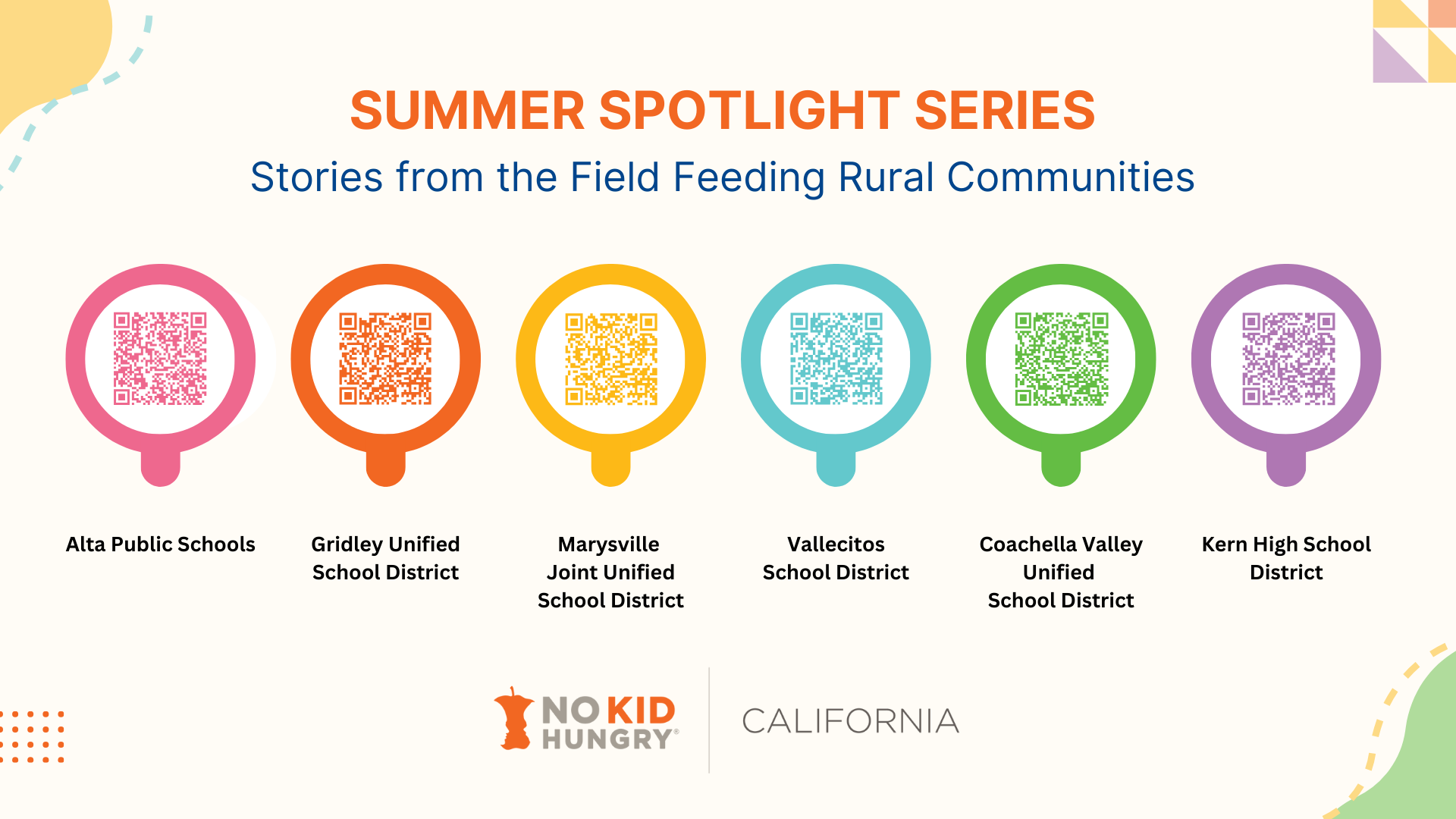
Learn about the creative efforts from six school districts and community leaders who have risen to this challenge. By adopting the flexible, free non-congregate meal service option in rural communities, these summer hunger heroes have helped bridge the summer meals gap and served thousands of nutritious meals. They also have ensured that every child has the fuel they need to thrive and return to school healthy and ready to learn.

Gridley Unified School District (GUSD), Butte County
In rural Butte County where 1 in 5 children experiences hunger, Director Michelle Diaz and her team of summer hunger heroes launched a new rural non-congregate summer meals program. By distributing multi-day meal kits from a single drive-through in Gridley, CA, the program served 29,038 meals—a 340% increase from the previous summer. Read more here.

Alta Public Schools (Alta PS), Tulare County
Alta PS is a charter school network based in Los Angeles that serves a diverse student population across Los Angeles, San Diego, and Tulare Counties. This summer, Dr. Jesse Gutierrez and his nutrition services team operated the rural non-congregate summer meals program to ensure students had access to nutritious food year-round. In four weeks, they drive 3-5 hours one way to serve over 4,900 meals from one distribution site in the Central Valley, just outside of Visalia, CA. Read more here.
Marysville Joint Unified School District (MJUSD), Yuba County
MJUSD has emerged as a leader in combating summer childhood hunger in Yuba County, CA, an area where 1 in 5 kids experiences hunger. Led by Director of Nutrition Services Amber Green and Culinary Operations Supervisor Nick Dramis, they served over 48,000 summer meals by successfully implementing the rural non-congregate, drive-through grab-and-go summer meals model across Yuba County, earning them recognition as No Kid Hungry’s summer hunger heroes. Read more here.
Kern High School District (KHSD), Kern County
KHSD, led by Nutrition Services Director Jennifer Davis, launched its first-ever rural non-congregate summer meals program. The program provided parents/guardians with pre-packaged meal kits, each containing seven days of breakfast and lunch, for pick up at four rural sites. KHSD substantially exceeded its goal while meeting the high community demand by serving over 520,000 meals. The success–driven by an efficient drive-through model and a focus on equitable access– is already paving the way for future improvements. Read more here.

Coachella Valley Unified School District (CVUSD), Riverside County
CVUSD successfully launched the rural non-congregate summer meals program to combat childhood hunger in the Coachella Valley region. Facing barriers like distance, transportation, and extreme desert heat, CVUSD’s Director, Carlos Murta, used school buses as mobile, grab-and-go meal kit distribution points. This flexible approach served over 52,000 meals in the first year, nearly doubling previous summer service and ensuring kids had continuous access to nutritious food across the Coachella Valley. Read more here.

Vallecitos School District (VSD), San Diego County
The rural non-congregate summer meals program provided Director Dorothy Davis and her team of summer hunger heroes the flexibility to feed more kids in the Vallecitos School District, which serves rural Rainbow, CA. Now in its second year of operating the program, they are serving 11% more meals, nearly 3,000 total, and were highly praised by families and school leadership for providing essential nutrition. Read more here.
“There’s long been a huge gap between the number of kids getting meals in the summertime and the kids who really need them – particularly in rural communities. New flexibilities for summer meals in rural communities means that no longer has to be the case. It is inspiring to witness the relentless dedication of school districts and communities across the state, who have risen to the challenge of rural and summer hunger.” – Kathy Saile, California director of the No Kid Hungry campaign
Read six more stories of schools and communities feeding children in rural communities across California here.
Ways You Can Help
New research by No Kid Hungry (see full report) reveals an overwhelming number of parents are struggling to put food on the table for their kids. This is especially true during the summer months when kids lose access to many essential free school meals. You can ensure kids have the nutrition they need to thrive in and out of the classroom and reach their full potential in a variety of ways:
- Donate. $1 can help provide 10 meals* to kids. Your support will help us fund meal programs all over the country and help us advocate for policies that will help kids get the meals they need. *Donations help support programs that feed kids; No Kid Hungry does not provide individual meals. Meal equivalencies vary. Learn more at NoKidHungry.org/OneDollar.
- Advocate for kids. Reach out to your elected officials and ask them to do more to end childhood hunger. Tell your lawmaker to advocate for policies that will help kids get the meals they need.
- Become a sponsor or expand your summer non-congregate meal program for Summer 2026. Visit our Center for Best Practices for more information on the rules, eligibility, grant information and more.
Last update: December 9, 2025